
The Motivation Matrix: Using AI to Tap into the Human "Why"
Yaz Gilbert
11/9/20254 min read

Digital marketing is at an inflection point. We have mastered the "what" and the "who." We know what customers click, what they buy, and who they are. Our AI-powered dashboards are overflowing with behavioral data, demographic segments, and predictive models. We can deliver the right message to the right person at the right time with terrifying efficiency.
And yet, something is missing. Our marketing is often smart, but it's rarely resonant. It's personalized, but it's not personal. We are so focused on optimizing the transaction that we've forgotten about the transformation. We are targeting the what of human behavior, but we are completely ignoring the why.
The next evolution of marketing is not about more data; it's about deeper understanding. It's about using AI not just to predict behavior, but to activate the fundamental drivers of human motivation. This is the Motivation Matrix—a framework for moving from surface-level personalization to profound, psychological connection.
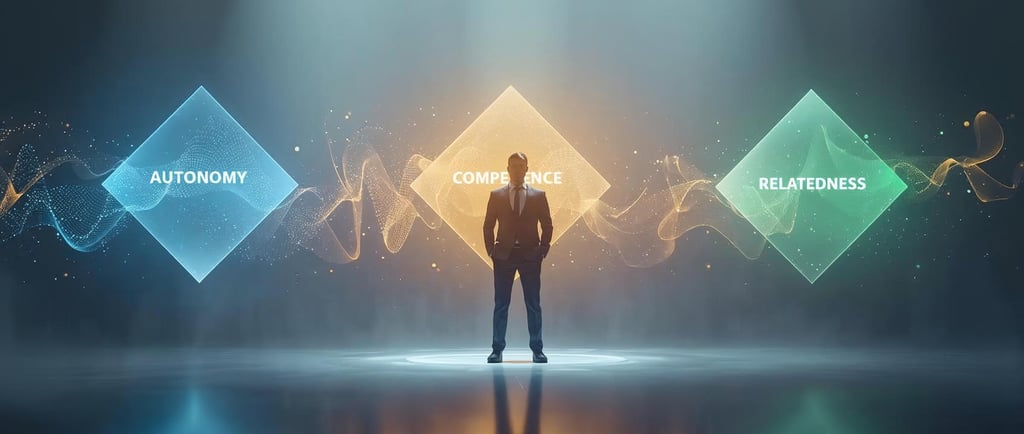
This framework is built on a robust foundation: Self-Determination Theory (SDT), one of the most validated theories of human motivation. SDT posits that all humans have three innate, universal psychological needs. When these needs are met, we feel energized, engaged, and intrinsically motivated. When they are thwarted, we feel disengaged and controlled. The three needs are Autonomy, Competence, and Relatedness.
The Three Pillars of the Motivation Matrix
By using AI to design experiences that satisfy these three needs, marketers can create a powerful, self-reinforcing loop of engagement. This is not about manipulation; it's about creating genuine value.
1. Autonomy: The Drive for Choice and Control
Autonomy is the need to feel in control of our own behaviors and goals. It's the feeling that you are the "author" of your life, not a pawn in someone else's game. Traditional marketing often thwarts autonomy by being pushy, prescriptive, and deceptive.
The Old Way (Thwarting Autonomy): A brand bombards a user with relentless retargeting ads for a product they viewed once. The message is, "You will buy this, whether you want to or not." This creates resistance and annoyance.
The New Way (Supporting Autonomy with AI): A fitness app uses AI to offer a user a choice of three different workout plans based on their stated goals. The AI then says, "Which of these feels most aligned with your energy today?" It gives the user control. In an e-commerce context, an AI might say, "We noticed you're interested in sustainable fashion. Here are five brands we support. Explore them at your own pace." The AI acts as a concierge, not a salesperson. It provides options and trusts the user to choose, respecting their agency and building goodwill.
2. Competence: The Drive for Mastery and Growth
Competence is the need to feel effective and capable in your interactions with the environment. It's the joy of learning a new skill, solving a hard problem, or getting better at something you care about. Most marketing is designed to create a sense of incompetence—"You're not pretty enough, rich enough, or cool enough... yet. Buy our product to fix it."
The Old Way (Thwarting Competence): A skincare ad shows a flawless model and implies, "Your skin is inadequate. Use our cream to be acceptable." This creates a feeling of deficiency.
The New Way (Building Competence with AI): A language-learning app like Duolingo is a masterclass in supporting competence. The AI adapts the difficulty of lessons in real-time to keep the user in the "flow state"—neither too bored nor too frustrated. It celebrates streaks and awards points, providing constant, positive feedback on the user's growing skill. A B2B software company could use AI to create a personalized onboarding "quest" for new users, with tutorials, mini-challenges, and badges that make them feel like a master of the platform in a week, not a month. The marketing is the product, and the product makes the customer feel smart and capable.
3. Relatedness: The Drive for Connection and Belonging
Relatedness is the need to feel connected to others, to care for and be cared for by others. It's the feeling of being part of a community, a tribe, a family. Marketing often tries to fake relatedness by using fake influencers or creating shallow "brand communities."
The Old Way (Faking Relatedness): A brand pays a celebrity to pretend they love their product. The audience knows it's a transaction, so it creates no real connection.
The New Way (Fostering Relatedness with AI): A running app like Nike Run Club uses AI to foster genuine connection. It allows you to cheer on your friends' runs and get cheers from them. It celebrates your personal milestones and shares them with a community that understands the struggle and the joy. The AI facilitates this human-to-human connection at scale. A brand could use AI to connect customers with similar values or use cases. For example, a camera company could use AI to analyze a user's photo style and connect them with a community of photographers who share their aesthetic, fostering a sense of belonging that has nothing to do with buying the next camera.
The Role of the Marketer: The Experience Architect
In this new paradigm, the marketer's role shifts from a "persuader" to an "Experience Architect." Their job is not to craft a message, but to design a system that satisfies these core psychological needs.
As the Ethical Designer: They use AI not to exploit vulnerabilities, but to build strengths. They ask, "Is this experience making our customers feel more in control, more capable, and more connected?"
As the System Builder: They work with AI to map the entire customer journey through the lens of the Motivation Matrix. Where are we supporting autonomy? Where are we building competence? Where are we fostering relatedness?
As the Storyteller: The narrative changes. It's no longer "Our product will make you better." It becomes "Our system will help you achieve your goals." The brand becomes a partner in the customer's journey of self-actualization.
Conclusion: From Transactions to Transformations
For a century, marketing has been built on a model of scarcity and deficiency. It has been a game of creating anxiety and selling the cure. This model is morally bankrupt and, increasingly, commercially ineffective.
The Motivation Matrix, powered by AI, offers a new path. It's a path based on the psychology of human thriving. It's about creating experiences that leave people feeling more empowered, more skilled, and more connected than before they encountered your brand.
This is the ultimate win-win. You create customers who are not just loyal, but intrinsically motivated to engage with you. They don't just buy your product; they believe in your mission. They don't just see you as a company; they see you as a partner in their personal journey of growth.
The future of marketing isn't about capturing attention. It's about earning it by helping people become the best version of themselves.